
From Hero to Patient: Where the IVF Website Conversion Funnel Breaks
The fertility website conversion funnel breaks when clinics prioritize high lead volume over downstream patient commitment by failing to address emotional safety and cost transparency. To fix these leaks, providers must align hero sections with patient intent and reduce friction at the call to action stage through low commitment entry points and rapid follow up.
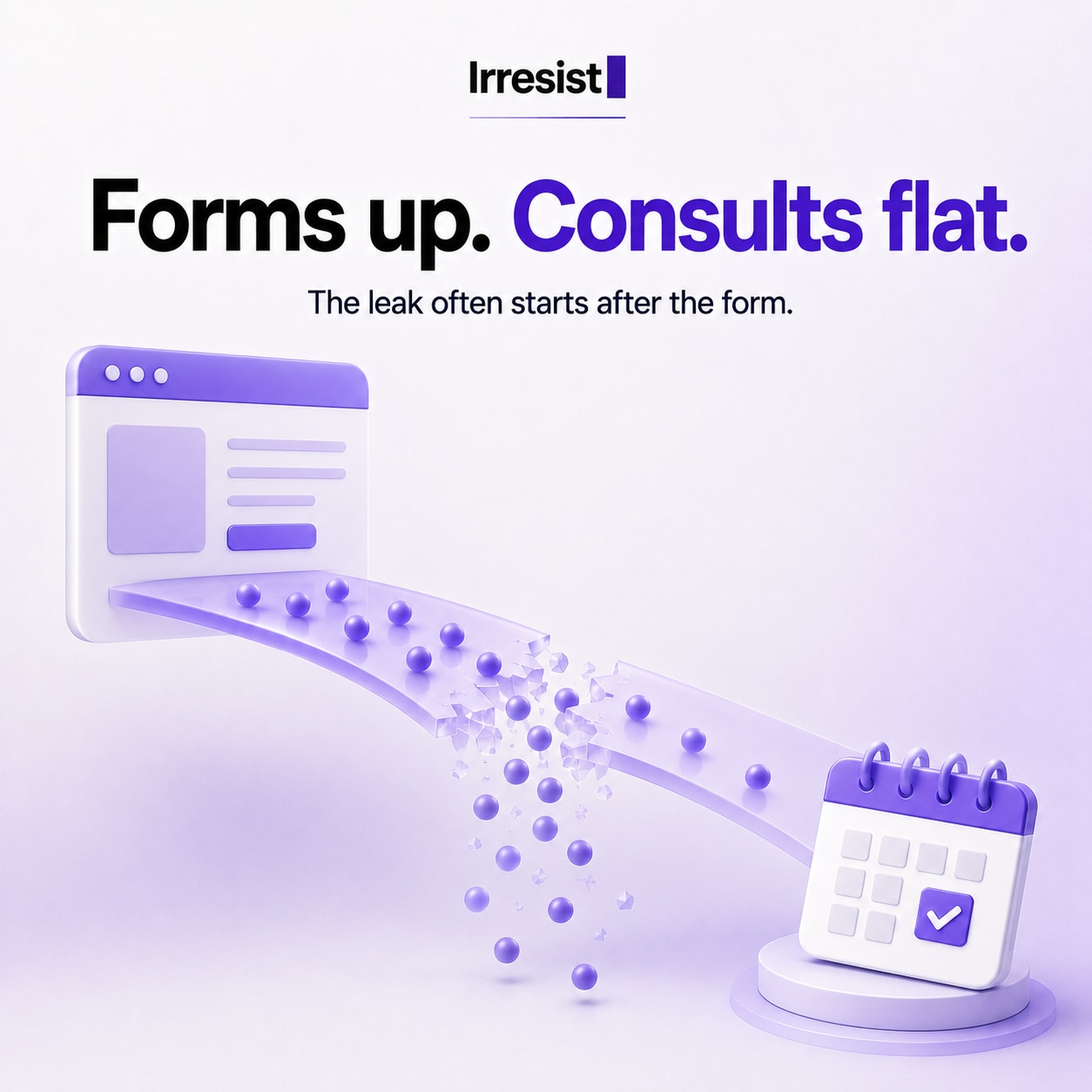
You pay heavily to get the right people onto your site. The hero holds attention, scroll depth looks healthy, forms fill up - and then booked consults lag behind all of it. That gap between strong top-of-funnel numbers and actual patients starting treatment is where most fertility marketing budgets quietly bleed.
This article traces the fertility website conversion funnel stage by stage, from first impression to patient start. You'll see exactly where energy drops between hero engagement, trust building, CTA action, follow-up, and downstream conversion, plus a stage-by-stage optimization model you can apply to your existing site.
Key Takeaways
- The funnel is a momentum path - Every transition from hero click to booked consult is a place where trust, clarity, or friction can fail.
- Lead volume hides the real leak - A form captures contact info, not commitment, so healthy lead counts can mask downstream drop-off.
- Emotion beats credentials up top - Hero sections that name the patient's situation outperform physician-brag layouts on engagement and booking.
- Cost opacity leaks more than high prices - Patients who can't estimate affordability won't book to find out.
- Mobile is where high-intent traffic lives - Every extra field and slow element costs more on a phone.
- You fix stages, not the whole site - Diagnose the transition losing the most momentum, then fix in sequence.
The Path From Hero to Patient, Stage by Stage
A fertility website conversion funnel is a momentum path, not a static checklist. Each stage hands energy to the next, and each handoff can fail. Here is the full path and where each stage tends to leak.
Hero Engagement
The first screen should signal that you understand the visitor's reality before it lists physician credentials. Patients in a fertility journey scan for emotional safety before clinical proof, so patient emotion beats clinic-brag layouts on both engagement and booking. Momentum drops when the fertility website hero section fails to name the patient's situation or mismatches the entry query - a searcher coming off a failed IVF cycle landing on a generic clinic overview feels no recognition and leaves.
Trust Building
Trust signals have to appear at the exact moments of doubt, not concentrated on one page. That means doctor video introductions, patient stories placed on high-intent pages rather than buried on the About page, plain-language success-rate context, and transparent cost framing. Strong IVF website trust architecture gives success rates age-band context and methodology notes, because a single headline percentage misleads patients over 40. Cost opacity drives more leakage than high prices. According to the HFEA's National Patient Survey 2024, only 62% of private patients received a personalised cost breakdown, and 40% of those paid more than first presented - a signal of how much pre-booking anxiety a silent pricing page creates.
CTA Action
A good fertility clinic CTA strategy sets honest expectations. Offer a short intro call, not a "full consultation," and give a lower-commitment alternative for patients who aren't ready to book. Momentum drops when the CTA asks for more than the visitor's readiness allows, or when nothing bridges an abstract success number to a personal next step.
Where Momentum Is Commonly Lost
The most expensive transitions sit in the middle and end of the path: lead-to-contacted, contacted-to-booked, and booked-to-attended. A form submission captures contact information, not commitment. Patients who filled out your form but never booked weren't unserious - they weren't reassured enough to take the next step.
The common causes of patient journey friction are specific and fixable:
- No clear next step after browsing, so the visitor stalls.
- Pricing anxiety from a page that says nothing about cost.
- Success rates without context - no age band or diagnosis framing.
- Form friction - too many fields, too early.
These map onto the fertility patient's emotional context. In the same HFEA survey, location and success rates ranked as the top clinic-choice factors (62% and 51%). Patients arrive after long, delayed timelines, and they scan for emotional safety before they weigh clinical proof.
Why Strong Top-of-Funnel Behavior Hides Deeper Leakage
High hero engagement and healthy lead volume can look like success while patients quietly leak downstream. A clinic can generate more leads month over month and still decline commercially if those leads aren't contacted, booked, attended, or converted to patients. Lead count is a vanity metric when it stops there.
Optimizing only to cost per lead makes this worse. Chasing a cheaper cost per lead pushes toward lower-intent traffic that fills forms but never attends a consult, quietly destroying your attended-consult rate. The fix is downstream measurement: track booked and attended consults, no-show rate, and response-time buckets. Those surface the leaks that lead counts hide.
This hidden layer is exactly what Irresist surfaces - tracking drop-off between hero click, form start, lead submit, and patient progression - so you fix the real leak point instead of guessing.
Desktop vs Mobile: Where the Path Diverges
For most IVF clinics, the majority of high-intent traffic arrives on a phone. Roughly 60% of healthcare search traffic now comes from mobile devices, so every extra field, slow element, or unclear CTA costs more on mobile than on desktop.
The friction-reduction levers are concrete: shorter forms that capture intent before medical detail, a sticky booking CTA, a visible response-time promise, click-to-call tracked by page, and testing on a mid-range device on 4G rather than your office wifi.
Patients increasingly prefer mobile-first experiences, so friction-free mobile booking captures visitors that clunky desktop forms lose.
A Stage-by-Stage Optimization Model
Rather than redesigning everything, diagnose the transition that loses the most momentum first, then fix in sequence. This model assigns a fix and a proof metric to each stage.
Apply it in order:
- Identify the entry intent behind each traffic source.
- Match the hero and content to that intent.
- Place trust signals at the exact doubt points.
- Set honest, low-commitment CTAs.
- Promise and track your response time.
- Measure all the way to the attended consult.
One static homepage serves first-time researchers, cost shoppers, success-rate evaluators, and treatment-ready patients badly. Intent-matched journey modules reduce that mismatch leakage without a full rebuild.
The Bottom Line
Stop treating lead volume as the finish line - the transitions between form, contact, booking, and attended consult are where your budget actually converts or leaks. Pull last quarter's numbers, find the single transition losing the most momentum, and fix that stage before touching anything else. If you want to see where drop-off happens across the full path and deploy intent-matched journeys without rebuilding your site, Irresist maps and closes those gaps on the site you already have.
FAQ
What is a fertility website conversion funnel?
It's the path a visitor travels from the hero section through trust building, CTA action, follow-up, and downstream conversion to becoming a patient. Treat it as a series of transitions, not a single page. Momentum leaks at each handoff where trust, clarity, or friction fails.
Where do IVF websites lose the most momentum?
The costliest leaks sit at lead-to-booked and booked-to-attended. The usual causes are fertility-specific: an unclear next step after browsing, pricing anxiety from missing cost info, success rates shown without age or diagnosis context, and mobile form friction.
Why do healthy lead numbers still produce few booked consults?
A form captures contact information, not commitment. High lead volume can hide downstream drop-off if those leads aren't contacted, booked, and attended. Measure booked-consult and attended-consult rates to see whether your funnel actually works.
How should a fertility clinic hero section be structured?
Name the patient's situation and intent before physician credentials, because patients scan for emotional safety before clinical proof. Match the hero to the entry query so a failed-cycle searcher doesn't land on a generic overview.
What CTA works best on IVF websites?
An honest, low-commitment offer like a short intro call converts better than "book a full consultation." Add an alternative for patients who aren't ready to book yet, so you don't lose the ones still researching.
How is mobile optimization different for fertility sites?
Most high-intent traffic arrives on a phone, so friction costs more. Shorten forms to capture intent before medical detail, add a sticky CTA and a visible response-time promise, and test on a mid-range device on 4G.
Do clinics need a website rebuild to fix this?
No. Intent-matched journey modules and stage-level fixes work on your existing site. Diagnose the leakiest transition, apply the matching fix, and measure the proof metric before moving on.